
News
Building Your Legacy: A Step-by-Step Guide to Securing Texas Acreage for Generations
An estimated $124 trillion in wealth will shift between generations over the next 25 years, according to research from Cerulli Associates. That national shift carries massive implications for high-growth markets like Houston and its surrounding suburbs. As family goals evolve, many are asking a fundamental question: How do we convert these resources into a lasting legacy?
It starts with choosing assets you can use and pass down to your family. Deeded Texas land along a prime growth corridor bridges that gap. Properties like Legacy Grand Ranch give you the option to build a primary home, plan for retirement, or secure a family estate for decades to come.
Here is a practical, step-by-step roadmap to guide your family through evaluating and owning multi-generational land.
Step 1: Define Your Family’s Purpose and Timeline
Before looking at specific properties, outline how your family intends to use the land over the next 10 to 20 years.
- Establish primary goals: Decide whether you are looking for an immediate custom homesite, a future retirement spot, a weekend family retreat, or something to buy and hold for future generations.
- Determine your build window: Look for communities that offer flexible, no-required-build timelines so you can secure property today without the pressure of immediate construction.
- Set shared expectations: Outline what features matter most to your family, such as privacy, open space, or access to nearby lakes and parks.
Planning Resource: Explore official state resources on real estate titling, trusts, and property transfers through the Texas State Law Library Wills & Estates Guide.
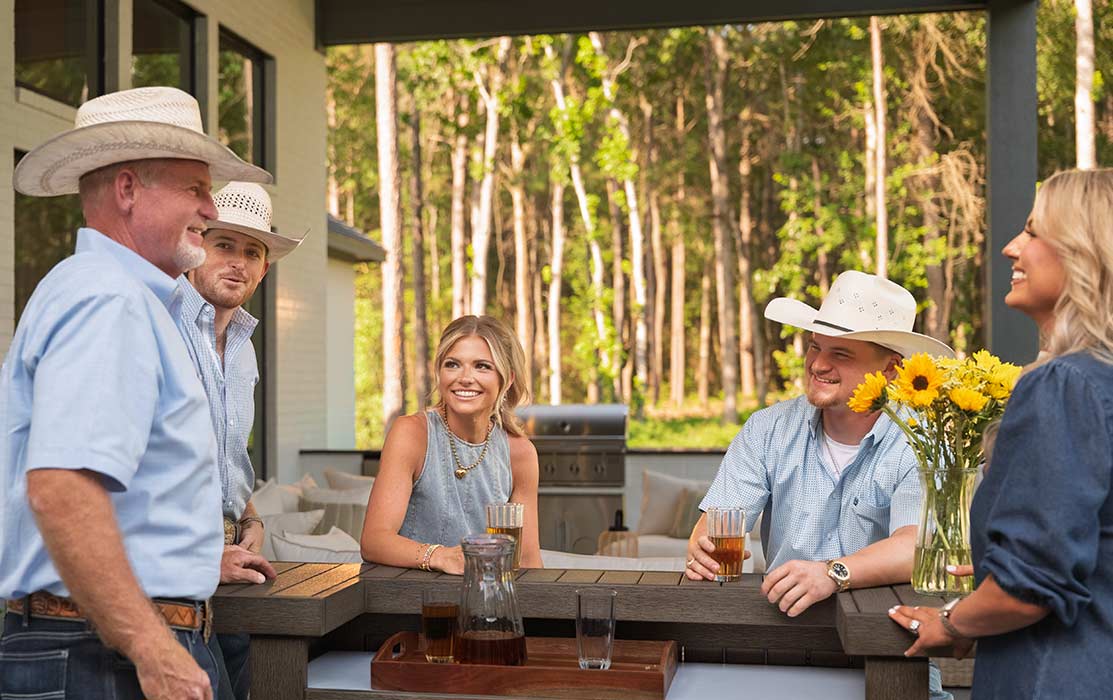
A family gathered on their outdoor patio.
Step 2: Map Your Travel Radius and Location Radius
True country living only works if it fits your daily or weekend routine. Test your target location against your lifestyle requirements.
- Measure drive times: Test the commute from potential acreage to major hubs like Houston, The Woodlands, or local medical centers, and look for easy access to major interstates and highways. Target properties within a 30 to 45-minute drive band.
- Evaluate growth vectors: Focus on established paths of regional movement, such as the North I-45 corridor stretching through Willis and Walker County, to ensure long-term convenience.
- Check surrounding buffers: Look for parcels bordering protected land, like national forests, which preserve privacy and prevent unwanted commercial development next door.
Planning Resource: Research planned road expansions, highway updates, and regional infrastructure projects along your corridor using the official TxDOT Project Tracker.

Aerial view of Houston, Texas
Step 3: Audit Site Infrastructure and Land Rules to Avoid Hidden Costs
Whether you are looking at restricted or unrestricted land, inspecting critical infrastructure and land rules before making an offer helps protect your building budget from unexpected costs:
- Compare utility readiness: Unrestricted land often requires out-of-pocket expenses for water wells, septic tanks, and extended power lines. In contrast, restricted acreage communities typically include underground electric, central water, and high-speed fiber-optic internet delivered directly to the lot line.
- Inspect elevation and natural drainage: Review property maps to ensure the parcel features high, rolling terrain with clear building sites positioned safely outside designated flood zones.
- Evaluate deed restrictions versus unrestricted freedom: Unrestricted land offers total architectural freedom, but provides no control over neighboring land uses. Restricted land uses community covenants to protect neighborhood aesthetics, set clear building standards, and preserve property character over time.
Planning Resource: Verify official flood hazard zones, natural elevation, and drainage profiles for any Texas parcel using the official FEMA Flood Map Service Center.
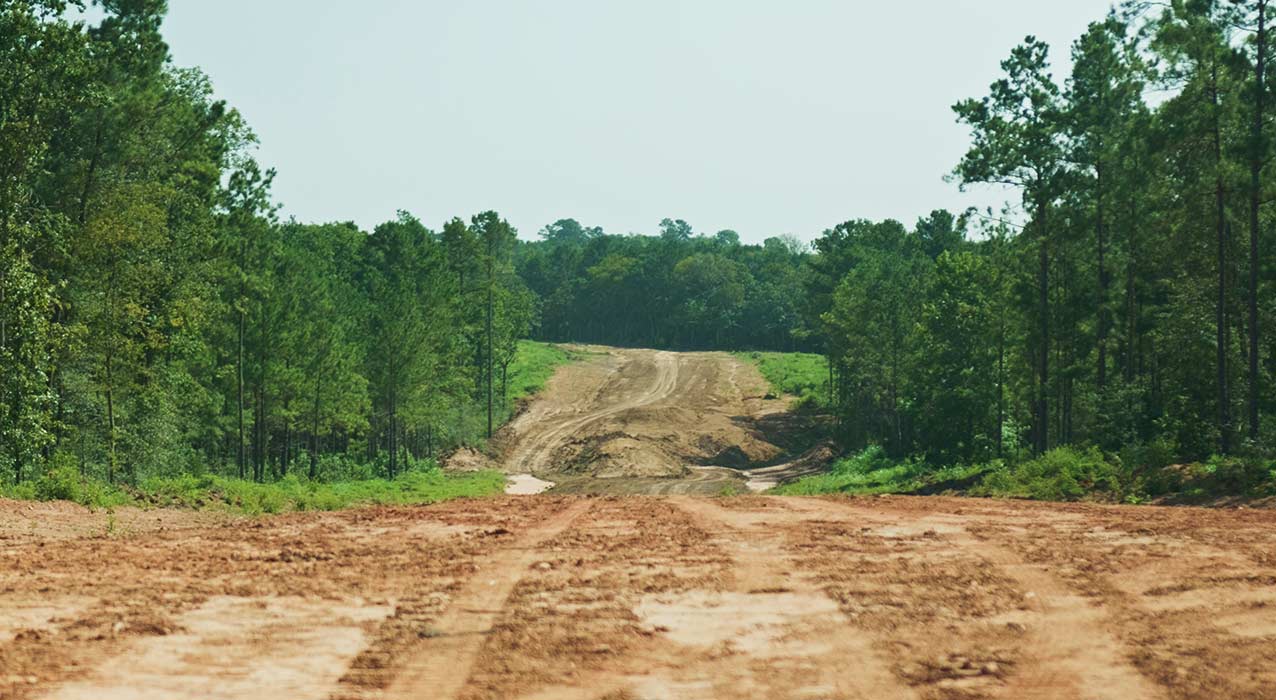
Roads under construction at Legacy Grand Ranch
Step 4: Determine the Right Lot Size for Your Lifestyle and Upkeep
Selecting parcel acreage requires balancing your desired space and privacy with practical, ongoing property maintenance:
- Assess your maintenance capacity: Consider the time, labor, and equipment required to care for the grounds. Larger tracts (10+ acres) often require heavy machinery, bush-hogging, or dedicated land management, whereas acreage in smaller ranges (such as 1 to 5 acres) provides spacious buffers and natural privacy with standard lawn care equipment.
- Calculate space for planned structures: Map out your envisioned building footprint—including the main home, outbuildings (such as a workshop, guesthouse, or barn), outdoor living areas, and required utility setbacks—to determine the minimum lot size needed.
- Confirm immediate usability: Choose a parcel size that allows your family to utilize the land for outdoor recreation, weekend visits, or quiet retreats even before ground is broken on a custom home.
Planning Resource: Learn how to calculate parcel size, define property goals, and evaluate maintenance demands using The Balance’s guide on calculating land-to-building ratios.
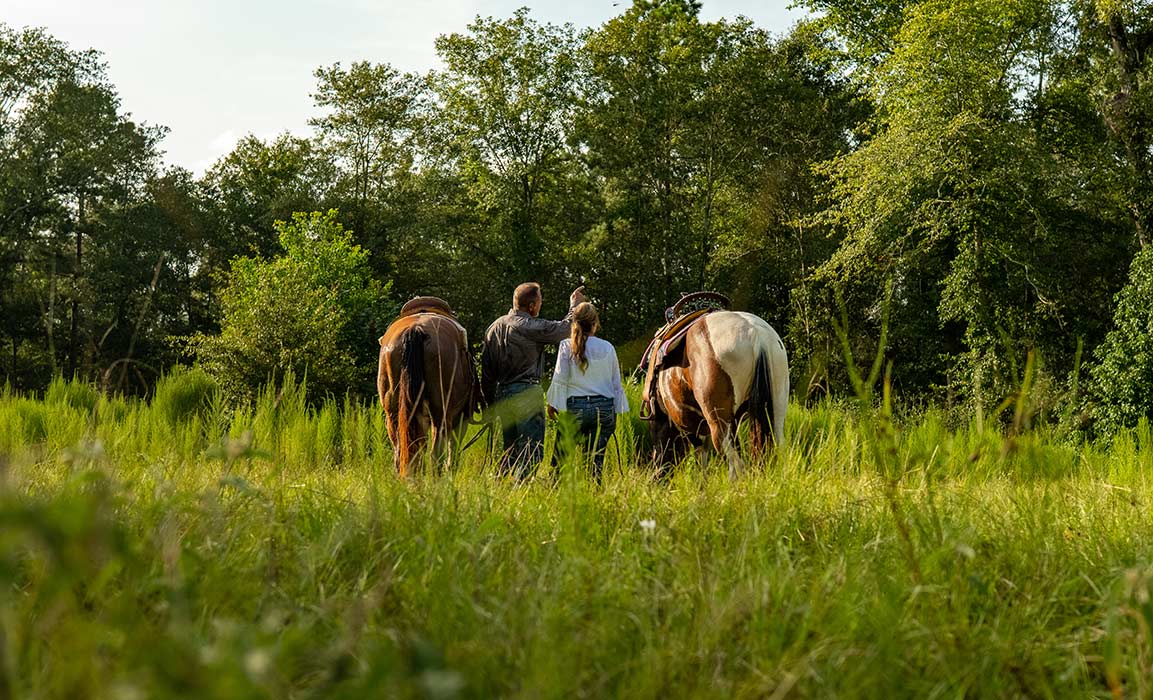
A couple evaluating a parcel with their horses
Step 5: Involve the Next Generation in the Selection Process
Generational ownership succeeds when the next generation feels connected to the land from day one.
- Schedule a joint site visit: Bring children or heirs to walk potential homesites, explore natural features, and pick out potential building locations together.
- Map out shared amenities: Work together to plan future outdoor gathering spots, trail networks, or fire pits to build excitement for the site.
- Create a family anchor: Use the acquisition process to start new family traditions, turning the property into a central gathering place for years to come.
Finding a community designed to preserve your vision is the final step in turning a multi-generational plan into a physical reality.
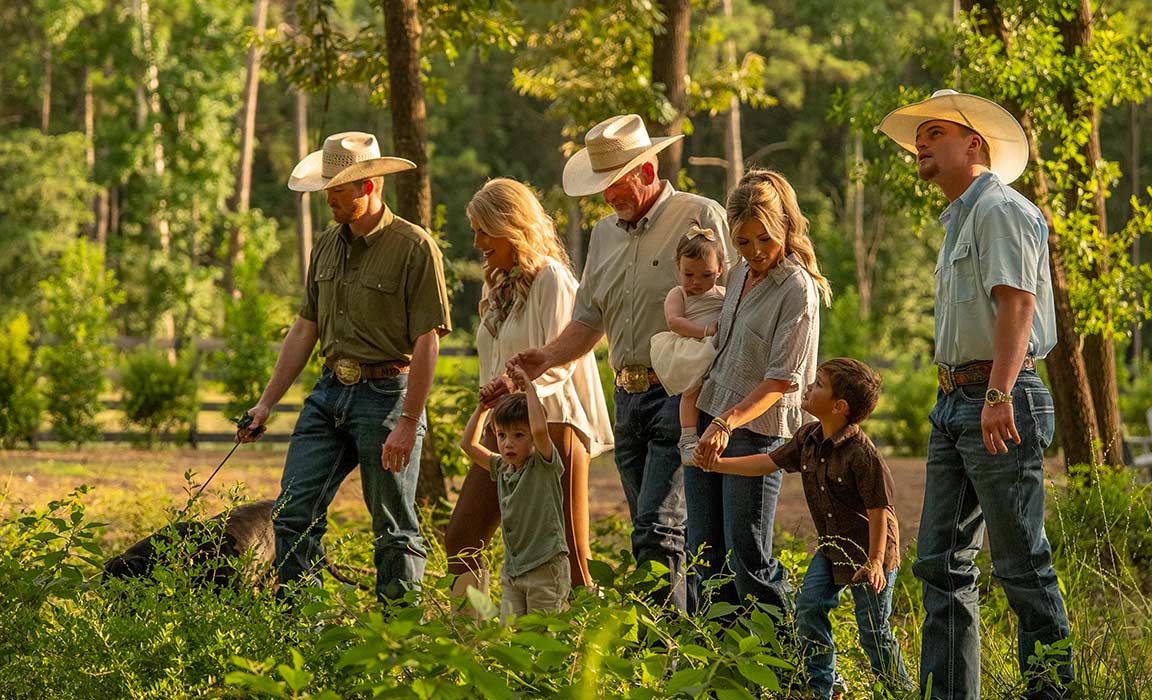
A multi-generational family touring a homesite
Newly Released Premium Parcels in the Sam Houston National Forest
If you’ve been dreaming of creating a legacy for your family, Legacy Grand Ranch offers 3- to 5-acre wooded estate homesites set within the North Woodlands Growth Corridor.
Surrounded by protected forest land, these premium parcels feature rolling terrain, high-and-dry elevation, and modern underground utilities with no required timeline to build.
Schedule your private land tour today and experience a higher standard for land at Legacy Grand Ranch. Call or text (833) 242-3220 to speak with a Land Consultant.
Make sure to follow us on Facebook and Instagram for new acreage releases, community updates, and events.
The Patten Properties Difference
Backed by over 40 years of experience, 600+ communities, and $1 billion in land sales, Patten Properties develops acreage communities with strong infrastructure, natural preservation, and long-term value in mind.
We find the land. You make it home.
Featured Properties
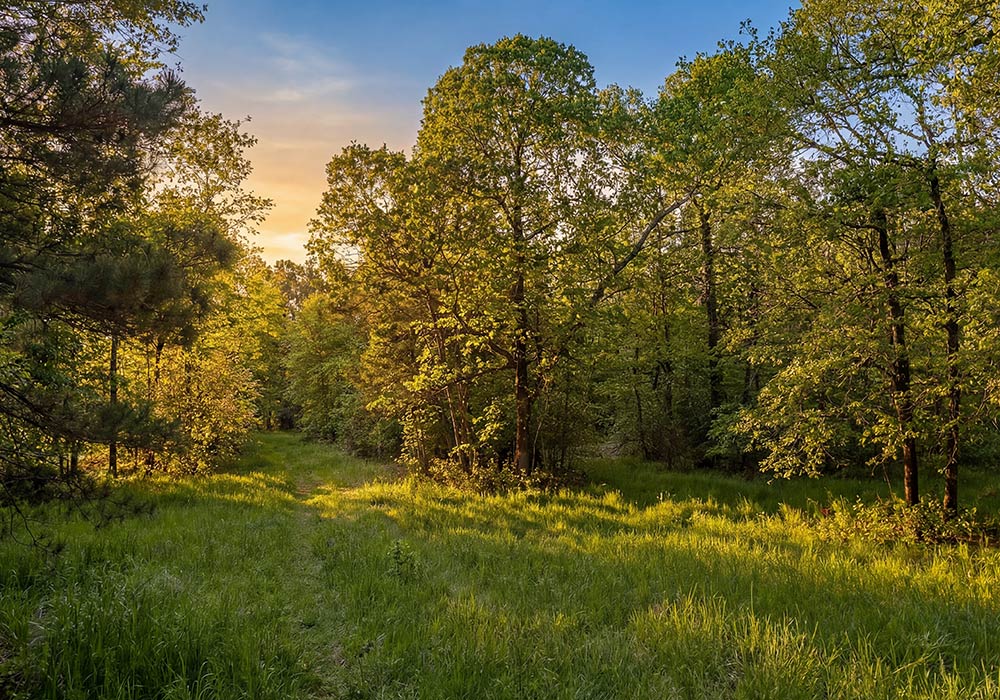
Legacy Grand Ranch
A woodland community north of Houston, offering 3 to 5-acre estates where family legacies begin, with mature oak trees, rolling terrain, modern infrastructure, and convenient access to the National Forest, Lake Raven, Lake Conroe, and Lake Livingston.
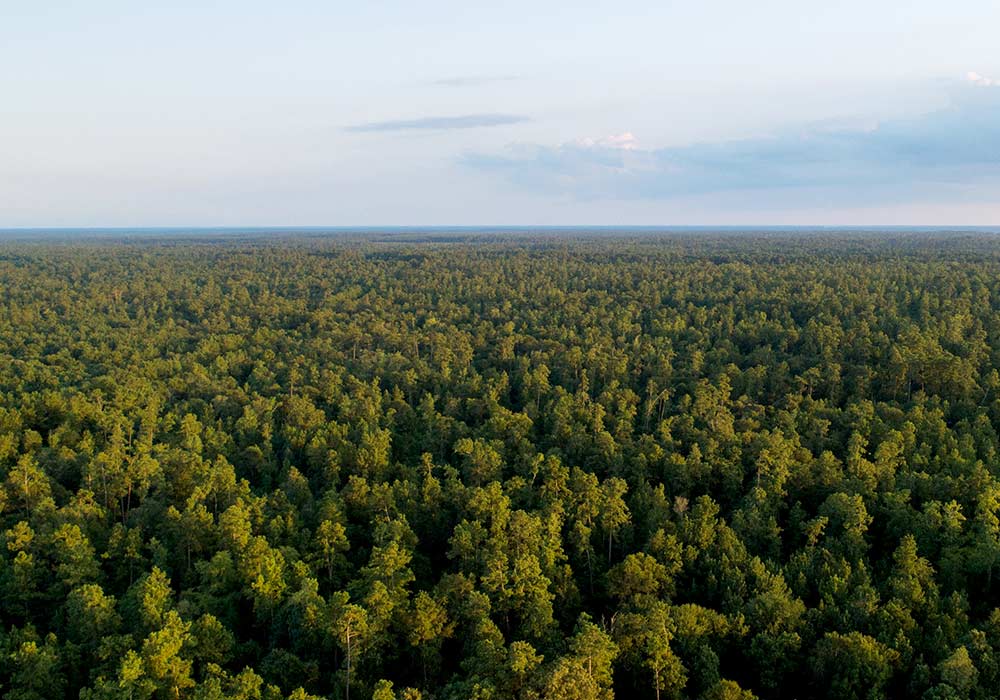
The Estates of Texas Grand Ranch
Just north of The Woodlands, tucked away in a private, secluded setting. 1 to 3 acre properties surrounded by National Forest and bordering 2,000 acres of protected State Park with easy access to I-45.
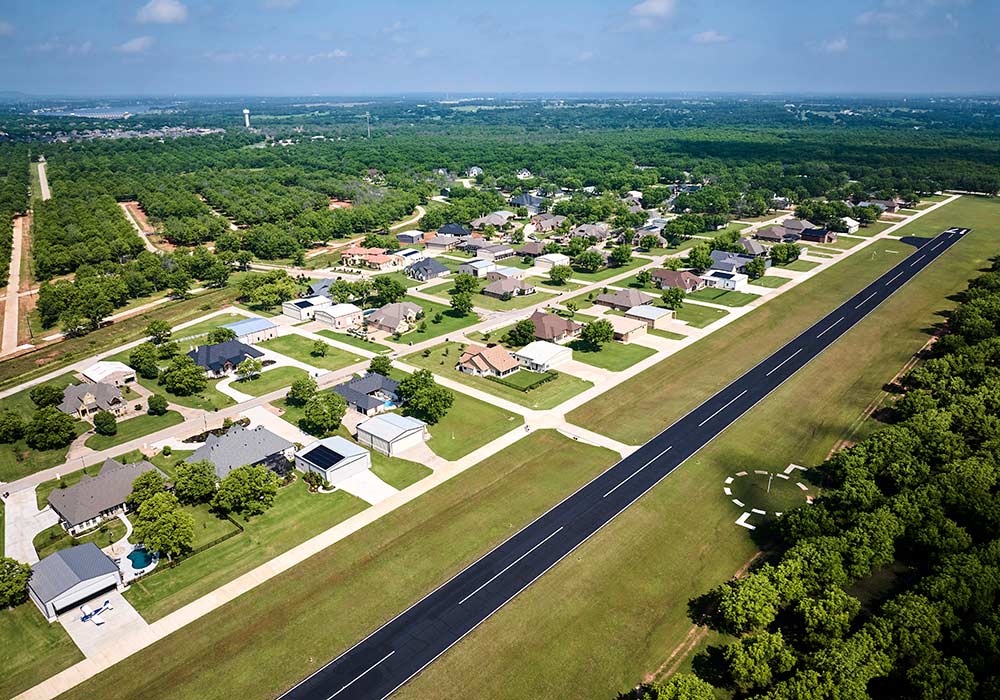
Pecan Plantation
A very unique opportunity to live in one of the most amenitized communities in Texas. Featuring a full-service clubhouse, activity center, pools, golf, tennis, marina, airport runways, and riverside parks.
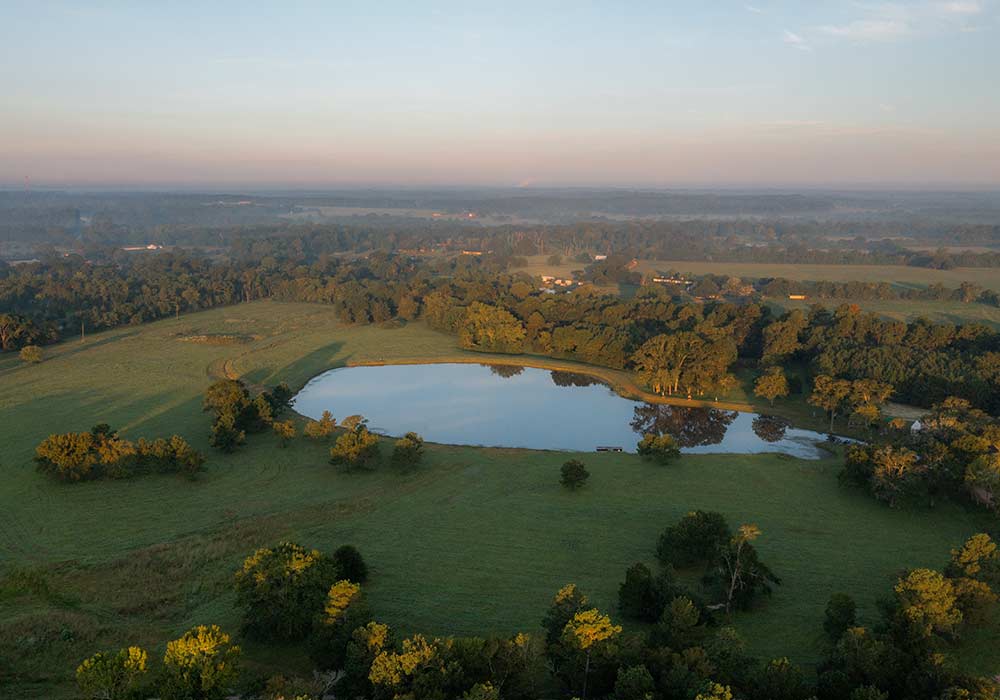
Republic Grand Ranch
Secure your legacy at Republic Grand Ranch, a high-elevation wooded paradise north of The Woodlands. Features include private parks, an 8-acre private, stocked fishing lake, and walking and hiking trails.
Deer Forest
One of the most desirable large acreage communities in Texas. Enjoy the privacy of a secluded, forested setting with easy access to I-45 and everyday conveniences.
0 Comments